



Guangxi’s 15th Five-Year Plan Strategy: Building a Solid Foundation of Industrial System with Ten Modernized Pillar Manufacturing Industries
稿件来源:菲律賓商報
2026年03月07日 10:35
By Long Tuyou, Jiang Xuelin
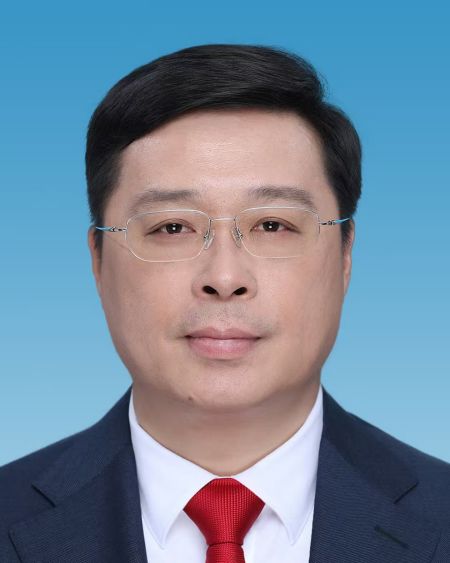
“In September, the completion and operation of Pinglu Canal will directly create the shortest, most cost-effective and most convenient international waterway transportation route for Guangxi and Southwest China to access ASEAN。” Wei Tao, Deputy to the National People’s Congress and Chairman of the People’s Government of Guangxi Zhuang Autonomous Region, said in an exclusive interview with China News Service during the Two Sessions. This will better enable Guangxi to connect rivers and seas and gather global resources and factors of production.
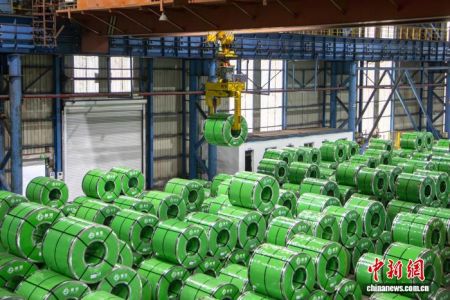
For Guangxi, located in China’s southern frontier, 2026 holds special significance. 2026 marks the start of the 15th Five-Year Plan period, and a year when this coastal, border and riverine region seeks to add new footnotes in its manufacturing landscape. In the interview, Wei Tao elaborated on Guangxi’s long-planned Ten Modernized Pillar Manufacturing Industries. This industrial portfolio, covering non-ferrous metals, critical metal materials, advanced steel materials, artificial intelligence, new-generation information technology, new energy vehicles and batteries, is regarded as the “skeleton” of Guangxi’s modernized industrial system for the next five years.
We Are Not Starting from Scratch
“Manufacturing industry is a key pillar of the national economy. Maintaining an appropriate share of manufacturing industry is crucial to accelerating the development of a modernized industrial system underpinned by the real economy, as well as to ensuring stable economic growth and advancing structural adjustment。” When discussing why Guangxi chose to develop the Ten modernized Pillar Manufacturing Industries, Wei Tao noted that this is a strategic decision based on Guangxi’s resource endowments, industrial foundations and competitive advantages.
With regard to its resource endowments, Guangxi is one of China’s top ten key non-ferrous metal production areas, with reserves of aluminum, manganese, tin, antimony, indium and other minerals ranking among the highest in the country. Two out of every three spoons of sugar in China are produced by Guangxi. Its fruit output has ranked first nationwide for eight consecutive years, and its artificial forest area is also the largest in China.
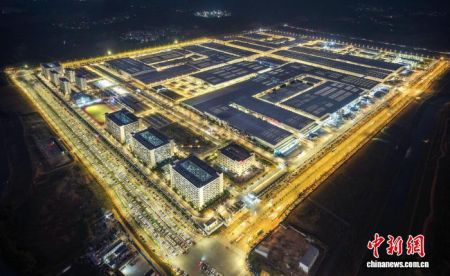
In terms of its industrial foundations, traditional pillar industries such as sugar, aluminum, machinery and metallurgy laid the foundation of Guangxi’s economic development. Thanks to years of progress, Guangxi is now been home to one 400-billion-yuan non-ferrous metal industry, two 300-billion-yuan industries in steel and food, four 200-billion-yuan industries in machinery, petrochemicals and chemicals, etc., and three 100-billion-yuan industries in automobiles, electronic information, etc. In particular, some of the emerging sectors such as new energy, new materials and new energy vehicles are swiftly moving toward the 100-billion-yuan scale.
Concerning to its competitive advantages, Guangxi serves as the only province/autonomous region in China connected to ASEAN by both land and sea, linking the vast markets of China and ASEAN. Container routes from Beibu Gulf Port reach more than 200 ports in over 100 countries and regions worldwide; sea-rail intermodal trains have exceeded 10,000 trips, and container throughput hit a historic high of over 10 million TEUs last year. The opening of the Pinglu Canal will further unlock this geographical potential. Guangxi is planning to leverage the “large-scale inbound and outbound” capability of the canal, focus on the Ten Modernized Pillar Manufacturing Industries, and put routes and corridors, logistics, trade and industries in coordinating development. All of this aims to accelerate the building of the Pinglu Canal Economic Belt.
In addition, the state has provided a raft of policy supports for Guangxi, including the construction of Qin-Fang Industrial Collaboration Parks, border and port-side industrial parks, a financial opening-up gateway facing ASEAN, and a national comprehensive energy security zone. These policies will enable Guangxi to further strengthen the security of capital, energy, data and other factors, and accelerate the building of cross-regional and cross-border industrial and supply chains.
“We have formulated plans for developing the Ten Modernized Pillar Manufacturing Industries to meet the needs of the country and leverage Guangxi’s strengths. In line with the trend of smart development, green transition and integrated growth, we will break down the boundaries between traditional, emerging and future-oriented industries, accelerate structural adjustment and pursue transformation and upgrading. We will pool efforts to build a number of advanced industries with distinct advantages, large scale and strong driving force, so as to seize the initiative for future development,” Wei Tao said.
Enhance Safeguards to Boost Industrial Project Implementation
For advancing the development of the ten pillar industries, Wei Tao outlined the development goals set by the autonomous region: fostering one trillion-yuan industry in non-ferrous metals and critical metal materials, two 500-billion-yuan industries in advanced steel materials and food processing, three 400-billion-yuan industries in forest product processing and papermaking, modern green chemicals, artificial intelligence and new-generation information technology, as well as four industries exceeding 100 billion yuan.
To achieve these goals, Guangxi has established the “Five Ones” Work Promotion Mechanism to strengthen overall coordination and address major cross-regional and cross-departmental issues. Under the mechanism, Wei Tao serves as the Chief Chain Leader to oversee overall work; each industry is assigned a Vice Chairman of the autonomous region as its Chain Leader; a dedicated task force is set up, an action plan is made, an industrial fund is established, and a number of chain champion enterprises are supported.
As for fiscal and financial support, the government investment guidance fund of the autonomous region has participated in establishing 36 industrial development funds with a total scale of nearly 70 billion yuan, providing targeted support for the ten pillar industries. For 2026, plans are in place to leverage 100 billion yuan of enterprise-benefiting funds to boost the development of the manufacturing sector.
On concrete actions, Guangxi will advance initiatives to supplement, strengthen and extend industrial chains, cultivate advanced manufacturing clusters, and carry out large-scale equipment renewal. Meanwhile, the region will implement the Strategic Emerging Industries Doubling Plan to develop smart manufacturing and green manufacturing.
Furthermore, Guangxi has issued the Action Plan for “AI + Manufacturing”(2025-2027), committing to having AI empower the new-type industrialization. It aims to push the output value of AI-related industries to exceed 100 billion yuan by 2027 and initially build a highland for the AI industry facing ASEAN.
Initiative to Strengthen Leading Enterprises and Cultivate Chain Champions
In terms of enterprise development, Guangxi is carrying out the initiative to strengthen leading enterprises and cultivate chain champions, aiming to foster more than 100 chain champion enterprises across the ten pillar industries by 2028.
Wei Tao noted that Guangxi will conduct in-depth research and study for the real economy, providing enterprises with whole-process services including “inspection and negotiation, project signing, construction and implementation, and completion and operation”. The region will deliver robust support in project approval and factor guarantee.
In terms of innovation-driven development, Guangxi will support chain champion enterprises in partnering with universities and research institutes to tackle key technological problems. Each year, the region will organize efforts to tackle over 100 core technologies critical to industrial chains, with a focus on making breakthroughs in key material technologies such as 4N-grade high-purity aluminum.
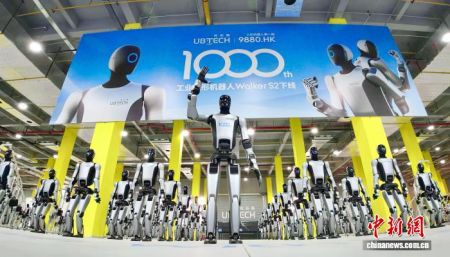
Meanwhile, Guangxi will encourage chain champion enterprises to replace equipment cores, substitute robots for workers and upgrade production lines, with the goal to build a number of digital workshops and smart factories.
Last year, Guangxi overcame a series of difficulties and challenges, achieving a regional economic growth of 5.1%, which marked the “three higher results”—higher than the projected target, higher than the growth rate of the same period last year, and higher than the national average. The industrial added value of enterprises above designated size rose by 7.7%, outperforming the national average growth rate for four consecutive years. The general public budget revenue exceeded 190 billion yuan for the first time, and the total volume of foreign trade imports and exports surpassed 800 billion yuan. Guangxi thus delivered an outstanding report unseen for many years. Currently, Guangxi enjoys unprecedented support from the central government, unprecedented opportunities for opening-up and development, and an unprecedented spirit of unity and motivation to pursue development. The region is witnessing profound transformations in mindset, development landscape, development strategies and work style. For high-quality development, the time is becoming ripe and the momentum is gathering. Guangxi is embracing the best development period in its history. Wei Tao stated that Guangxi will continue to optimize its business environment, provide high-quality services for enterprises investing and developing in Guangxi, and make “Investing in Guangxi is Investing in the Future” a shared consensus among an increasing number of enterprises.
For overseas investors, Guangxi boasts a clear industrial logic. By building on its resource endowments and industrial foundations, and leveraging its geographical advantages and policy dividends, the region aims to foster scale effects and competitive edges across the ten pillar industries.
As the inaugural year of the 15th Five-Year Plan period, Guangxi has rolled out its strategic blueprint for the development of manufacturing industries. For investors dedicated to deepening industrial and supply chain cooperation between China and ASEAN, this vibrant region is unlocking new prospects and immense potentials.